Schools often celebrate their annual ending with field day, assemblies, graduations, and parties – a two-week conclusionary hurrah. With or without the celebrations, it’s time to say goodbye.
Highlighting books that include sentimental hopes for future endeavors feels like a good way to close out this school year – books that substitute for the yearbook messages left unwritten.
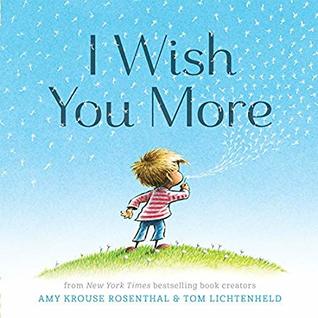
Amy Krouse Rosenthal and Tom Lichtenheld’s I Wish you More provides that feeling. From the summery outdoor pictures to the reference to “more hugs”, the illustrations bring the feeling of a pre-Covid 19 end of the school-year goodbye. The list of wishes include acknowledgement that success will require effort on the recipient’s part and that happiness requires occasional pauses to enjoy the joys of life.
Another children’s book that encourages students to grow into their best selves is Be You by Peter Reynolds. The cheerfully vibrant illustrations help convey attributes children need to develop into who they want to be. Reynolds goes beyond the traditional “be kind” message and includes instructions on how to be curious, persistent, and connected to others while also taking alone time to be alone.
As librarians we chose books like these that share messages we think the students need to hear. Christian Robinson’s perfectly timed new book answers his question, “What do I most want to say to young readers?” The answer is his title, You Matter.
Robinson’s belief that children need to see themselves when they read a book caused him to depict “as many different kids as possible” when he wrote and illustrated You Matter. Hearing him describe this philosophy four months ago highlights his sincere hope. https://vimeo.com/387817641
Many of the illustrations in You Matter do not depict children and caught me by surprise. For example, a dinosaur unable to scratch a mosquito bite, and the world needing to start over after a disaster are not the expected “warm and fuzzy” pictures found in a sentimental story book. However, these images fit his overall theme and add depth that might not be noticed by younger readers. This book really is written for everyone. And hopefully if you haven’t read You Matter yet, you will now feel so inspired.
If you have the means, now is the perfect time to add new books to your collections – local bookstores are beginning to open, and they need our support.
Last night my daughter suggested we play a board game we had purchased at a thrift store but never figured out how to play.
Why not? This shelter-in-place time has been great for that sort of thing – trying things we’ve always meant to try. The game was about choice. And, I won. Most likely because it’s easy for the kids to predict what I will chose.
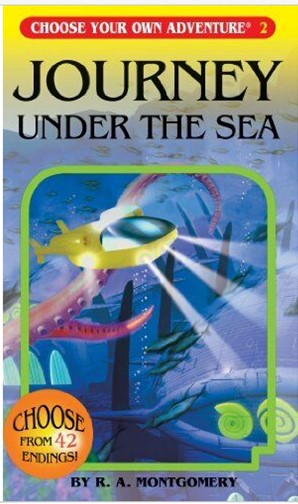
That idea of choice is at the heart of one of my favorite series. As an avid chapter book reader in the early 80s, I was fascinated by the “Choose your Own Adventure” books. They were written in second person, allowing the reader to become the main character, making plot choices through turning to corresponding pages. Leaving one finger on the previous page allowed readers (those of us not willing to commit) to quickly return to that moment of choice and choose differently; it was interesting to see how much a single decision could alter the plot line and ultimately the ending.
While searching for library books about positive character traits, I was thrilled to learn that this format is back! In a picture book!
Ganit and Adir Levy have begun a series called “The Power to Choose” or as the protagonist’s cape subtlety reads, “P2C.” These aren’t superhero books though. An energetic child has multiple decisions to make during the day, and those decisions directly impact the outcome of the day. More immediately than in real life, children can see how disobedience limits options and how positive choices lead to more positive outcomes.
As an added benefit, the “Power to Choose” books have the previous choice’s origination page number inside a yellow arrow-box on the bottom left corner of the two page spread, just in case the readers want to check how a different choice would have impacted the day. In the book What Should Danny Do? those choices lead to nine separate stories.
When the book first arrived (along with a hundred or so others), I didn’t have the time to read all nine versions. But what does a librarian without students in her library have time to do? The librarian gets to read!
That’s one of the blessings of this encouragement to slow down and spend more time at home. We have been given that pause button we so often have wished for.
The first two weeks were a luxury. We tried new things and had more intentional dinner times, knowing that this was just temporary. But now, with two children graduating from high school and one on the verge of a wedding, it pains me to see their lives placed on hold. And then there is the guilt of knowing that this pause button is costing some people their lives. And others their livelihood.
As I reflect on the biggest challenges of my life though, I do remember that there is joy even in the darkest days. And we shouldn’t feel guilty about finding joy in difficult circumstances. We should embrace joy whenever it comes.
I would love to hear of the joy others have experienced, or the fun new things they’ve tried – the successes and even the failures. Some of our best laughs have come through those failures. Feel free to leave me a message (or send me one) about what have you taken the time to do that you wouldn’t have done otherwise.
It didn’t take long for life to flip upside down. As an elementary school librarian without a library, students or books, my role has changed. I can still read to my kids and have opportunities to recommend books – but only electronically.
For chemo families, much of this situation feels familiar: after receiving unexpected news, life changes, especially the need for isolation and germ exposure prevention.
It feels familiar to me for another reason too – my query letter (the plea an unpublished author sends to potential agents) mentions preparing children for the possibility of life changing in an instant.
In my to-be-published, someday-in-the-future book, a medical situation arises, causing my first-grade protagonist to miss his school party. More than ever, we understand that. Due to medical precautions we are all missing the school party. Every party. Indefinitely. The graduations, the weddings, and even the funerals. We especially miss the social parts of life as we knew it and would gladly change back into our school clothes to have that interaction back.
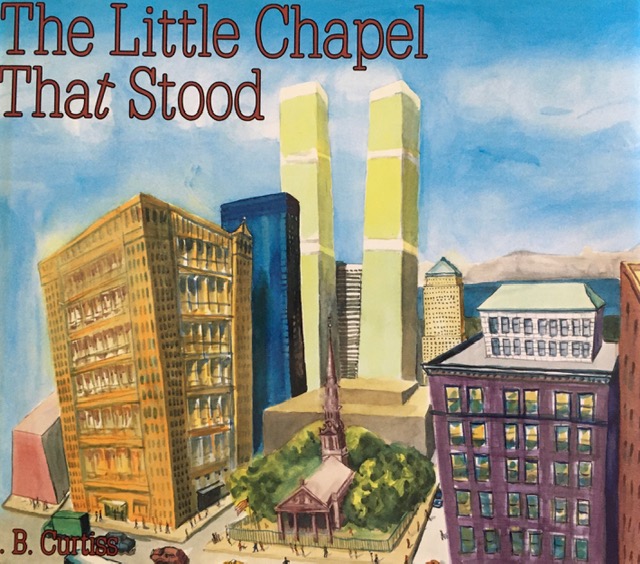
As a result, the books I’m drawn to this month are ones of resilience. The Little Chapel that Stood is a beautiful poem about St. Paul’s Chapel, near the Twin Towers. Written by A. B. Curtiss and illustrated by Mirto Golino, this book explains how that tiny chapel has withstood both time and tragedy since George Washington’s days. Wanting to verify the non-fiction aspects of this story, I visited my favorite history website, The Clio. (https://theclio.com/entry/19992) The building’s history is as majestic as the book professes and so much more could have been said. St. Paul’s chapel would be a wonderful topic for students to study while completing their school at home learning.
And the calendar tells me it is still March. It is still Dr. Seuss month! The book that is most given to graduates provides inspiration for our situation too. Many of us are feeling that slump that Dr. Seuss refers to in Oh, the Places You’ll Go. “And when you’re in a Slump, you’re not in for much fun. Un-slumping yourself is not easily done.” Many of us feel trapped in the spot that Theodore Geisel referred to as “a most useless place. The Waiting Place…for people just waiting.” But our waiting places are filled with opportunities to be innovative and creative.
Thankfully most of us are not trapped on a cruise ship or in a hospital. We are in our dwelling places that are full of “someday I will” projects. Someday is here. Now is the time. Be creative. It’s healthy and sharing that creativity brings joy to other people. I love seeing the parodies that have been created during the extra time talented people have had. And photos of projects attempted. And new recipes tried. And seamstresses working their magic.
I’ll end this entry with a quote from Richard G. Scott because he says it best…
“Being creative will help you enjoy life. It engenders a spirit of gratitude. It develops latent talent, sharpens your capacity to reason, to act, and to find purpose in life. It dispels loneliness and heartache. It gives a renewal, a spark of enthusiasm, and zest for life.”
Have you noticed an increase in giraffe books lately? I’ll mention three that I’ve added to my collection.
If you go to Kohl’s this month, you may notice a stuffed giraffe and it’s coordinating book by Jory John and Lane Smith called Giraffe Problems. It is one of those wonderful stories of new friendship and the awareness that comes from understanding another’s perspective – along with a dose of learning to love our own physical appearances. Yes, the world needed another book with that message. We clearly have not yet learned it. Theodore Roosevelt’s statement still rings true – “Comparison is the thief of joy.”
Another giraffe book that delights the K-2 set, is I am NOT a Chair by Ross Burach. It is so fun to read out loud! And it uses many of the writing techniques students are currently being taught at that age, such as pop out words and ellipses. Perfectly placed page turns build dramatic emphasis and the ending includes irony. It truly is a joy for all ages – including difficult to please teenagers.
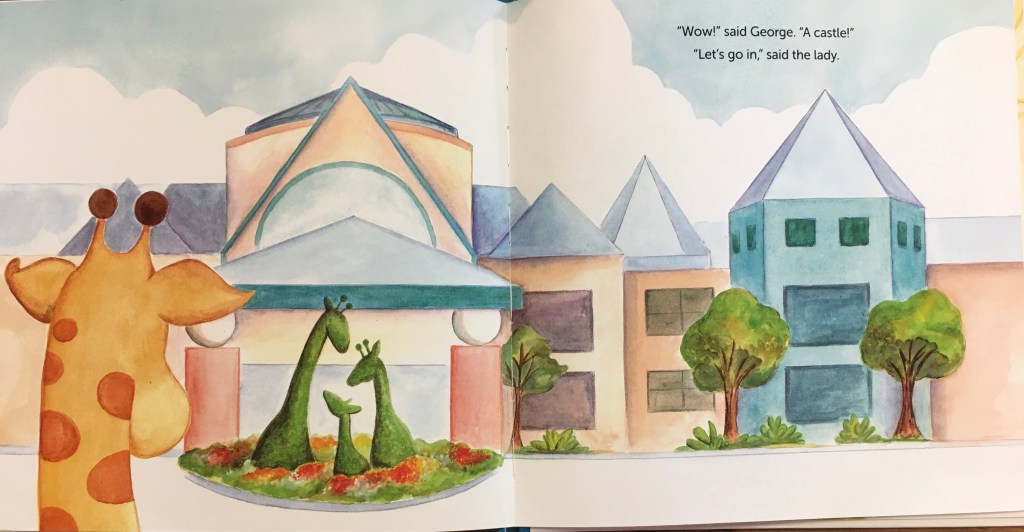
A local book I wanted to mention is by Joan Schoettler. It is called “A Home for George” and features a fictional story about how Valley Children’s found their giraffe mascot. It is a cute and much needed awareness tool for the hospital. I find myself wanting to stop by the gift shop to purchase my own stuffed George the giraffe; however, George isn’t the heart of that hospital – the people are.
The children who frequent Valley Children’s, and the adults who dedicate their lives to it, deserve this book to be a first step. There is so much more than should be said about this beautiful castle on the hill.
I love that A Home for George was written and is being distributed – children in this valley benefit from the book’s existence. Mykel Newton Suntrapak’s illustrations beautifully depict scenes from this region and from the hospital.
Every library in the Valley would benefit from having this book – even if it is simply to facilitate conversation. Watching the faces of those who recognize this illustration speaks volumes. Listening to their stories brings hope.
While working on my bachelor’s degree, I optimistically took an art class intended for elementary school teachers. It filled a requirement, and I thought it might help in future author/illustrator endeavors. It didn’t go as I had hoped. I received an A in the course, but sketches of wine bottles and cloth napkins aren’t practical in children’s lit.
I may have had more luck if I had invested my time watching online drawing tutorials, especially when illustrators like Mo Willems and Jan Brett facilitate the imitation of their famous characters.
The talent that both of those artists have amazes me. The expressions on Trixie’s face in the “Knuffle Bunny” series show such emotion but yet are so simplistic that it gives hope to aspiring child artists.
And the detail in Jan Brett’s illustrations leaves readers in awe. My students’ favorites are the “Gingerbread Baby” books. Even though the storyline automatically brings elementary school affection, Jan Brett still invested countless hours in the details of the illustrations. For those of us whose attempts at drawing a house involve a square with a triangle on top, Jan Brett shows us what a house really looks like. And her trees? They have individual branches and pine needles!
My favorite book of Jan Brett’s is “The Umbrella.” Most of us will never be in a position to visit a cloud forest, but we feel like we’ve experienced a glimpse of their beauty after seeing Jan Brett’s artwork.
This month I had the opportunity to visit the Water Lilies again – one of hundreds of Monet’s works of art depicting his beautiful pond. Seeing the variety of colors and the thick brushstrokes brings awe. More than a hundred years after his passing, his paintings continue inspire so many other people and works of art.
Mary Whyte captures water lily beauty using watercolor in “I Love you the Purplest.” With her elegant illustrations, readers pause, better understanding and feeling Barbara M Joose’s message. The language gracefully combines with the art to share the affinity of a mother’s love – how a mother can love each child so completely and so uniquely. And, it provides parents with an honest way to answer the question, “Who do you love best?”
I would love to see Mary Whyte’s paintings in person. And Jan Brett’s. And so many other works of art. I love the idea behind Eric Carle’s museum of Picture Book art. Children’s illustrations have power and importance. An author’s words aren’t read unless the reader is enticed to pick it up. Artwork provides that motivation.
Admiring art in books (and during occasional museum visits) feels like my destiny. And, I’m okay with that – I am better with words than I am with pictures. One of these days, I will make it to Massachusetts to see beloved picture book illustrations first hand. And I’ll keep my fingers crossed to someday win the contest to have Jan Brett visit our school. Someday there may be a great story about a wine bottle befriending a napkin, but until then, my illustrations will rely on the talent of others.
On the first day of working at a school, the most important question to answer is…
“What do you want the students to call you?”
For a classified employee, a common option is to add “Miss” to your first name, combining the expected display of respect with the intimacy of first name usage. During my years as a preschool teacher, I was “Miss Maria.” However, when I became a librarian after sixteen years of marriage and the birth of five kids, “Miss” didn’t feel like the right fit. And my last name isn’t difficult to say, so I opted out of the “first letter of the last name” option. (Besides, does anyone working with first graders, really want to be known as “Mrs. Pee?”) So, now at school, my first name is “Mrs.” And my last name is “Powell.”
As much as I thought that “Mrs. Powell” would be easy to say, many kids get confused. You see, the first three letters of my last name match the first three letters of our school assemblies – “Pow Wows.” Because that term is more familiar to the students, being called “Mrs. PowWow” is a daily occurrence. As is “Library Teacher.” And at the grocery store, I often hear an excited “That’s the Library!” when kids see me. Being referred to as a building isn’t meant disrespectfully – it shows that the kids are also excited about my job – and they know where to find me when they want a book.
The spontaneous things kids say provide great opportunities. Like when I grab a story to read and the class says, “We’ve already read that one.” I love to say “Me too. I’ve read it more than 100 times!” Some books are worth reading more than once.
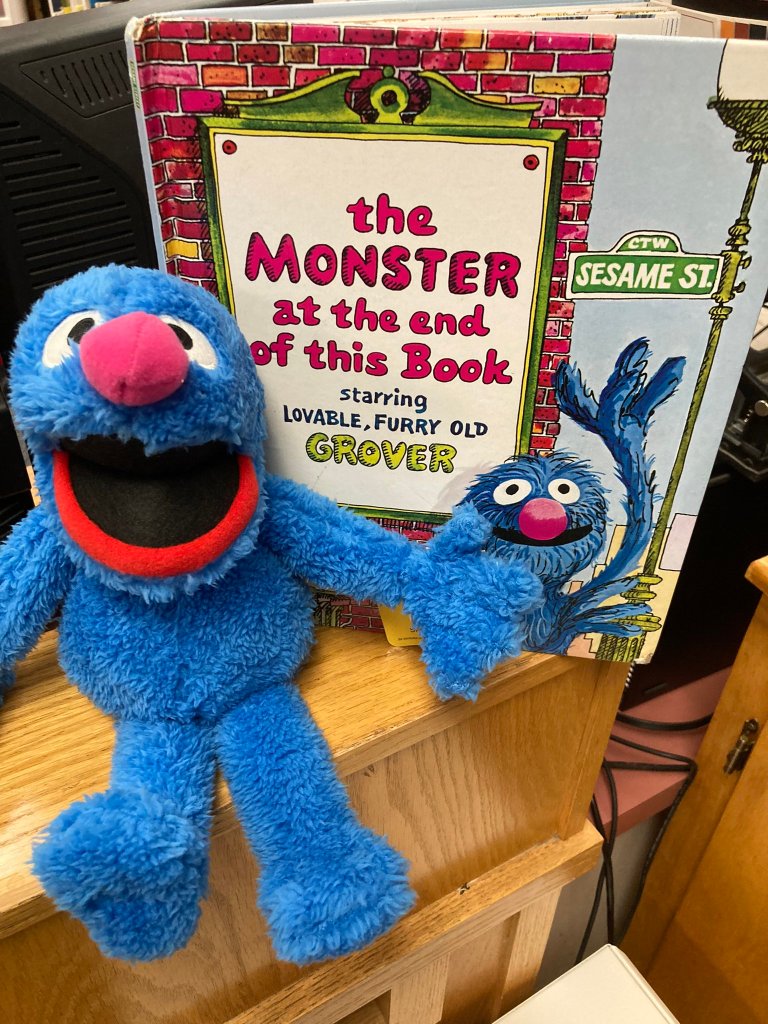
The book I have read most often is likely to be the one my mom read to me most often – Dr. Seuss’s “The Sneetches.” But last week I chose to share a different childhood favorite, Jon Stone’s “The Monster at the End of this Book.” I was reminded of it in my Children’s Literature class when we discussed the word “pastiche.” (When one work of art celebrates another.) As I read modern children’s literature, I love seeing glimpses of this book’s influence. Its legacy is vast.
How “good” a book is also depends on the audience. For example, I never bought my own kids “I’ll Love you Forever.” The stalkerish tendencies of the mother never felt right to me. (I’ll admit those actions are especially tempting during my almost-empty-nest stage of motherhood, but no. Just no. Even location sharing with my grown kids feels like an inappropriate invasion.) However, when I read “I’ll Love you Forever” to my elementary students, they see it as funny. And it becomes so fun to read out loud. We get to do that gasp of anticipation, while making big eyes and covering our mouths in surprise as the mom crawls across her teenage son’s floor.
I love being a librarian, and I am excited to take this love of books one step farther.
Adults often ask children…
“What do you want to be when you grow up?”
In elementary school, I would answer that I wanted to be a text book writer. I loved writing (and thought I could do better than the authors of the bland books we were compelled to read). Because I was painfully shy, my goal was to remain behind the scenes. I’m still not a fan of the spotlight, but there is now something I want more than anonymity. I want to be a real author.
Fourteen years ago, I accidentally wrote my first non fiction children’s book.
When my fourth child was diagnosed with Neurofibromatosis, we left the office with just the phone number of a national NF support group written on a scrap of paper. That’s it. A phone number. I needed more information. I needed something tangible. And, the internet was an unreliable place to look for answers.
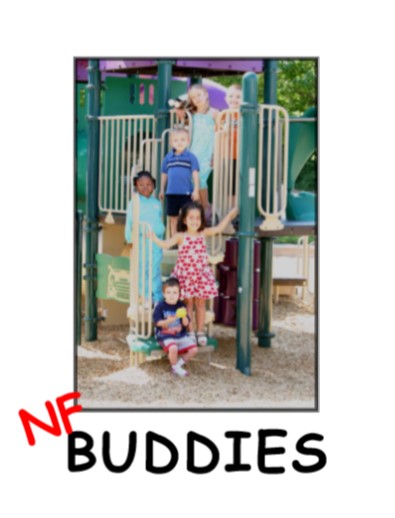
Plus, I knew that at some point I would need to explain NF to my son. At that age, he loved and memorized his scrapbooks. So, I made a medical scrapbook explaining the condition through photos of my son and one of his buddies with NF. When doctors saw the booklet the boys carried to their appointments, we were encouraged to expand it and make it available to other families. Wanting to remain behind the scenes (and hoping to protect his identity), I left the book authorless. If I had any idea that “NF Buddies” would last this long, I would have held out for better photos and begged for graphic design help.
Now, the children in the book are preparing for college, and I’m left with the question…
“What do you want to be now that the kids are grown up?”
I know what I want to be and feel ready to take the steps necessary to become a published author. When submitting manuscripts, one of the prescribed steps is showing publishers an online presence. As usual, I am late to the game. Blogging is old school now. As is reading paper books. And, even writing paper books.
But, I want to write those paper books so I am following the outlined steps, and I am creating a digital footprint. Follow me if you want to help in my quest…




 Loving the Library